An independent field guide · Est. on the island
Mallorca,
properly.
The coves worth the walk, the towns worth slowing down for, and honest advice from someone who lives here year-round.
Start exploringStart with the sea
Find your kind of blue.
Not every perfect-looking cove is right for every day. Filter by access, facilities and what you actually want to do when you arrive.
Explore all 15 beaches →Es Trenc
The one everyone shows you in photos before they visit — white sand, turquoise shallows, salt flats behind the dunes. It's popular for good reason, so go early or go in shoulder season.
Cala Mondragó (S'Amarador)
Inside a protected natural park, so it's stayed genuinely wild-feeling — pine trees down to the sand, calm clear water. Good for kids who aren't strong swimmers yet.
Caló des Moro
Tiny, cliff-framed, and the water is almost unreasonably blue. It's on every Mallorca postcard for a reason, which also means it fills up fast in summer.
Cala Varques
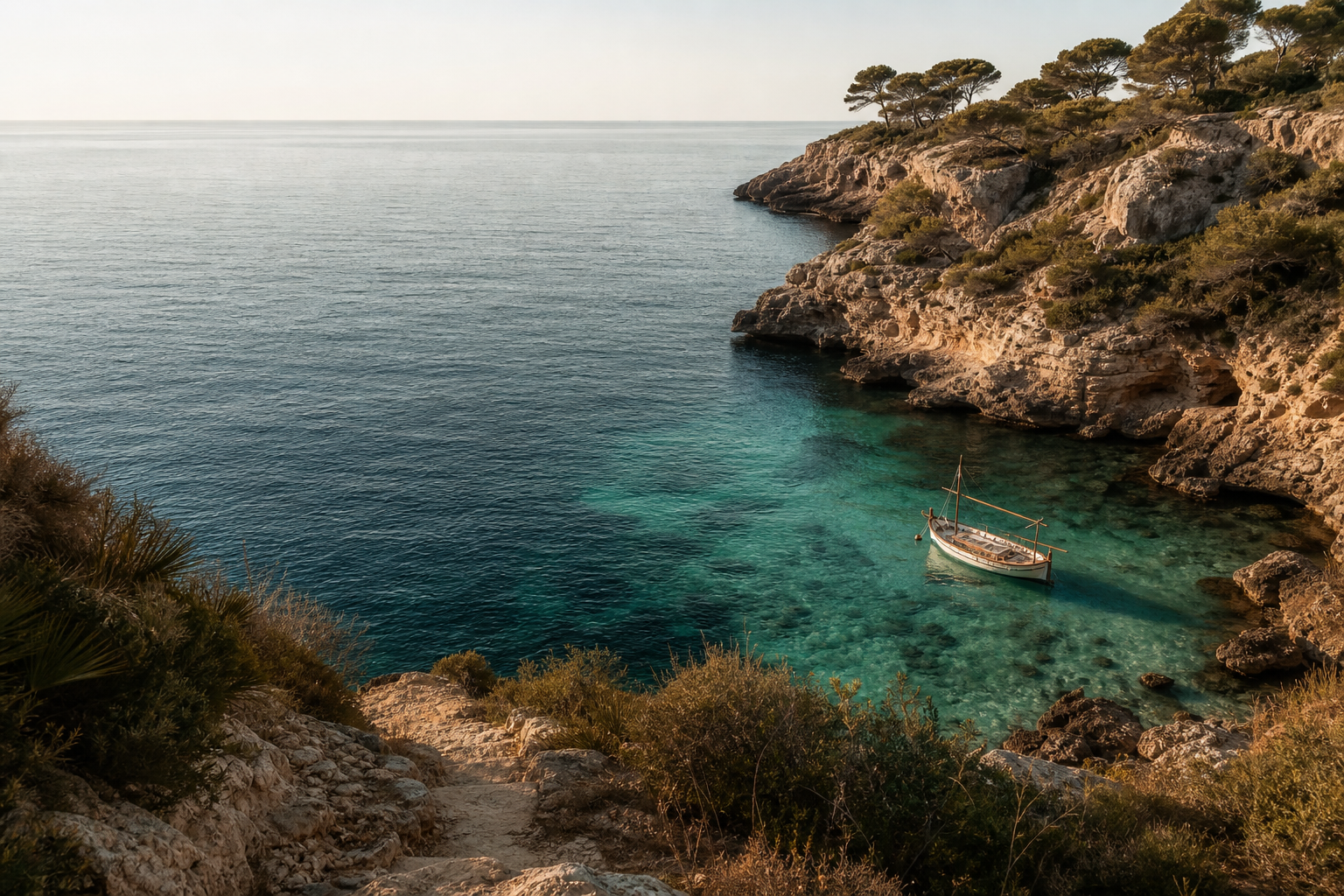
A proper walk-in cove backed by pines, no road access at all. We wrote an entire dedicated guide to this one — it deserves it.
A local point of view
“I made the guide I’d send to a friend before they booked anything.”
I grew up on this island. This site is the guide I'd actually give a friend visiting — the coves worth the walk, the towns worth a slow afternoon, and the stuff I'd skip.
Marc Alzamora
Local guide, Porto Cristo
Palma
The capital — a real, year-round city that happens to be by the sea.→02Sóller & Port de Sóller
An orange-grove valley town with a tram down to its own bay.→03Deià
A stone village stacked up a hillside, favored by writers and artists for a reason.→04Porto Cristo
A working harbor town with caves, coves, and no pretense.→Make it yours
A Mallorca plan, without the spreadsheet.
Good to know
Before you
land.
What is the best area of Mallorca to stay in?+
For culture and restaurants, choose Palma. For mountains and walking, Sóller or Deià. Families usually do best around Alcúdia and Platja de Muro, while Porto Cristo is an excellent base for the east coast's coves.
How many days do you need in Mallorca?+
Seven days gives you time for beaches, one mountain day, Palma and a few towns without turning the trip into a race. With three or four days, focus on one region.
When is the best time to visit Mallorca?+
May, June, September and early October offer warm weather with fewer crowds. July and August have the hottest weather and busiest beaches; winter is quiet and excellent for walking.
Do you need a car in Mallorca?+
Not in Palma, but a car makes the island's small coves, mountain villages and quieter inland towns far easier to reach. Book early in high season and never park outside marked areas.